🧭 Catalog and backup adoption (Recover)
After each run the engine writes a catalog inside the destination (<backup>/catalogo/): indice.json, tarea.json (no URIs or commands) and a snap-NNNNNN.tsv.gz per version. It's the map that lets you rebuild the backup from another machine.
What it's for
- Total disaster: new server, new disk. Install the engine, point it at the same destination and recover everything — without the original local index.
- Moving a backup between engines: another machine can adopt the task and keep backing up incrementally.
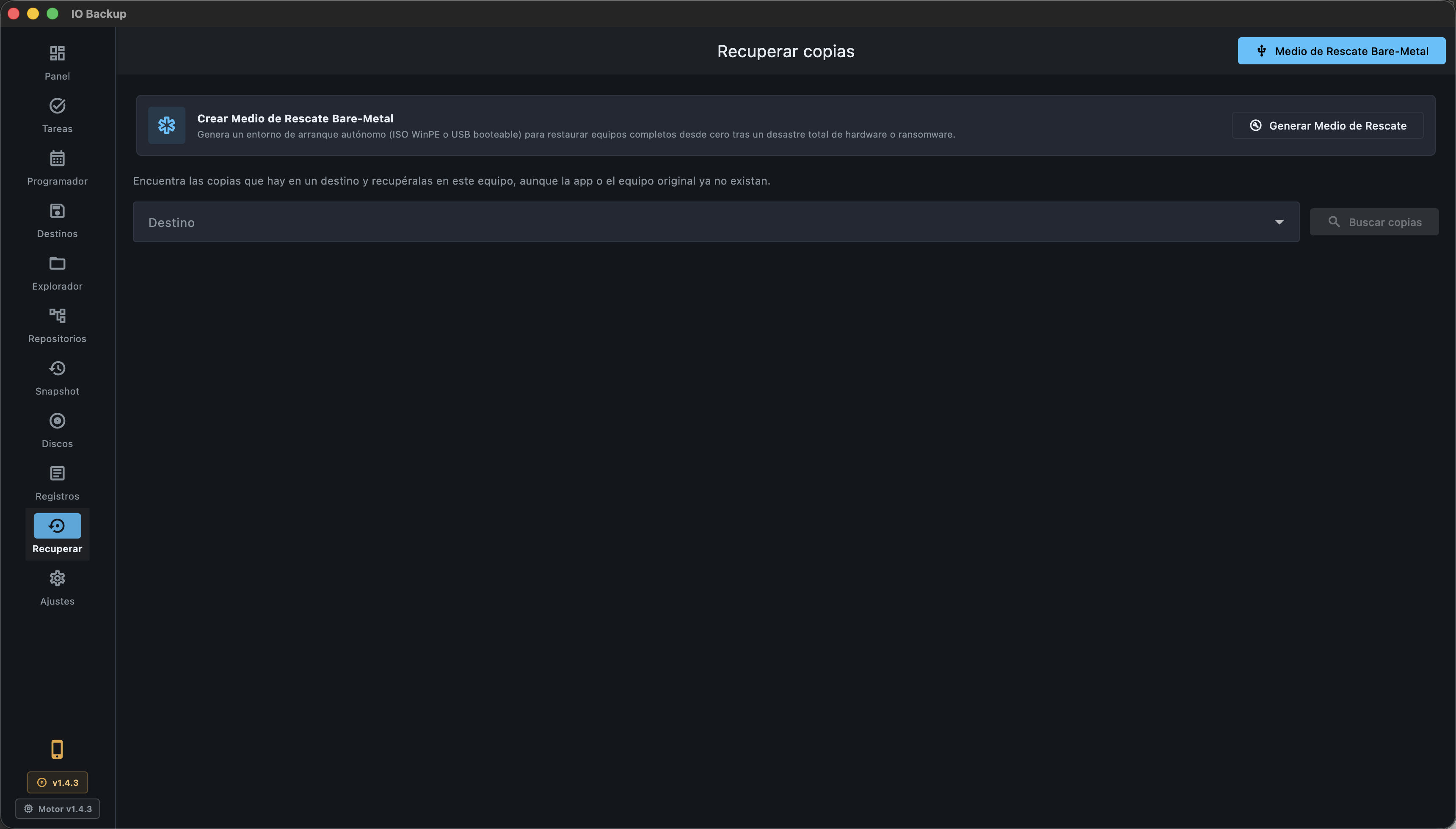
The app's "Recover" section
- Scan (
POST /recovery/scan): the engine reads the destination and lists backups that have a catalog. - Adopt (
POST /recovery/adopt): the backup becomes a task on this engine, tagged withadopted_job_<id>. - On the first run after adopting, the engine compares by hash every file before uploading it: it doesn't resend anything already there — the incremental chain continues where the other engine left off.
No catalog (old backups)
Backups made before the catalog existed have no indice.json on the destination. They can be restored (the data is there) but not adopted to continue incrementals — in that case you restore and start a fresh backup.
Catalog security
tarea.jsondoesn't contain URIs orpre/post_command: anyone reading the catalog on the destination learns none of your credentials and can't execute anything.- Adopting requires being paired with the engine — nobody can adopt your backup without controlling your panel.
With encryption
Adoption works the same way, but you need the backup's password to unwrap clave.iobk — without it the catalog isn't much use (the data is encrypted on purpose).